- Vadym Humeniuk - Resident Architect
- Datapunkt Enterprise Architecture
- Hits: 386
Transactional and Analytical Data Architectures
Introduction
In today's data-driven world, organizations like Datapunkt need a robust data architecture that can handle two critical functions: powering real-time transactional processes and fueling insightful data analysis. This article delves into Datapunkt's approach, which hinges on the separation of transactional and analytical data pipelines. We'll explore the design principles that govern this separation and the specific patterns used to optimize data flow for each purpose.
Understanding the Data Flow Imperatives:
Several key factors influence the design of Datapunkt's data architecture. The timeliness of data is paramount. Customer-facing processes, like claims processing or policy management, demand near real-time data to ensure smooth operation. On the other hand, analytical applications might be content with daily or monthly updates, focusing on identifying trends and patterns over time.
Availability is another crucial consideration. Transactional systems, the backbone of daily operations, require 7x24 availability to guarantee uninterrupted service. Analytical systems, used for periodic analysis, can tolerate some downtime without significantly impacting business continuity.
The workload type also plays a role. Transactional processes typically deal with individual data objects, like a specific policy or claim. In contrast, analytical pipelines work with massive datasets, crunching numbers and uncovering hidden insights.
Finally, data and historization needs differ between the two pipelines. Transactional systems primarily require current, active data to support ongoing processes. Analytical use cases, however, often demand a broader scope of data, including historical records, to provide a more comprehensive picture for trend analysis and future predictions.
Designing for Distinct Needs:
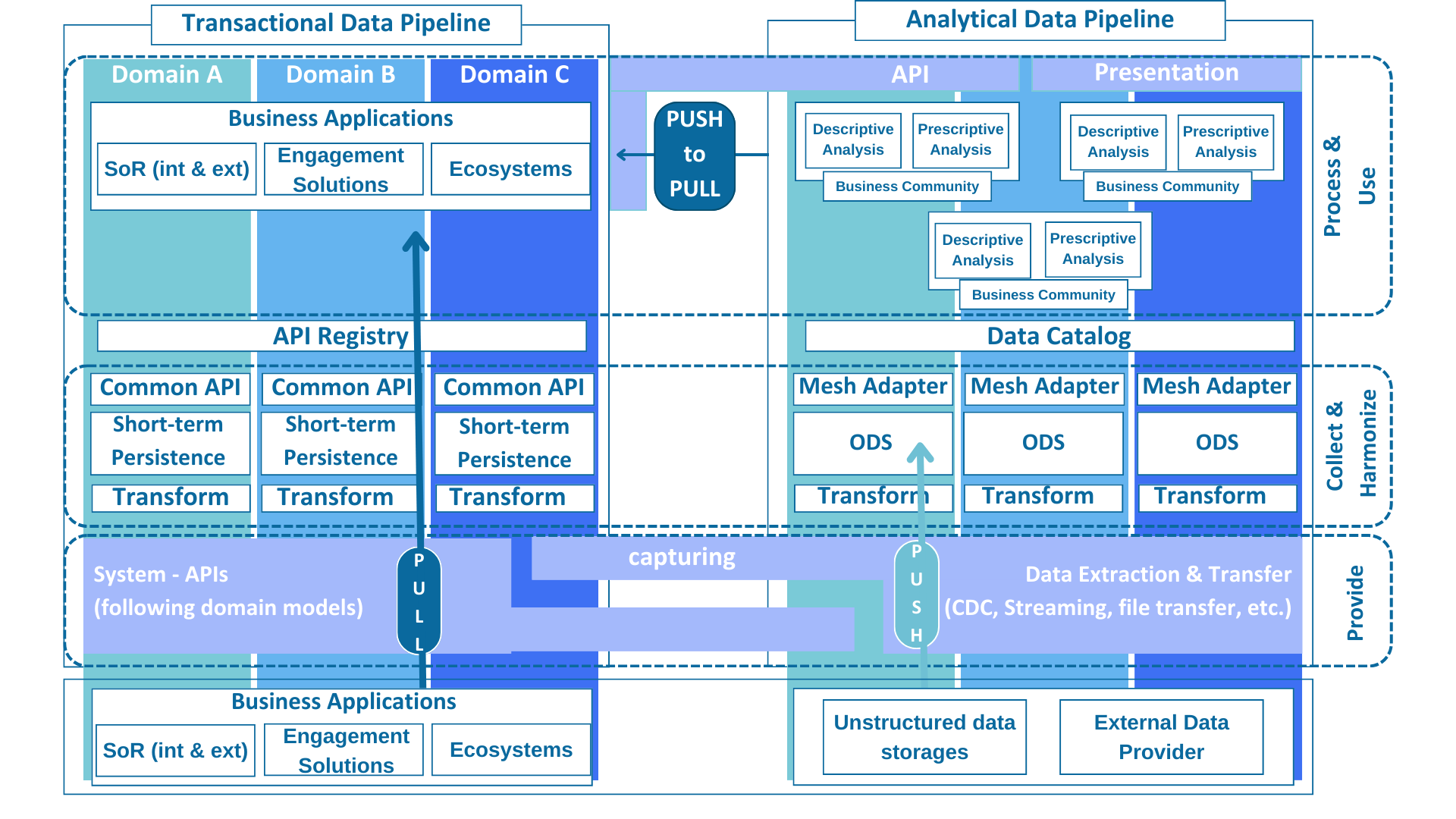
Datapunkt's data architecture addresses these diverse requirements by implementing separate pipelines for transactional and analytical data. This separation ensures that the stringent demands of transactional systems don't burden the analytical pipelines, allowing them to focus on in-depth analysis without compromising performance.
Here's a closer look at the design principles governing each pipeline:
-
Analytical Pipeline (Push-Oriented): Data is actively pushed to separate storage for long-term historical analysis. This "push" approach often occurs based on business events, capturing the data at the most relevant point in time. This stored data can then be processed daily, monthly, or even on-demand depending on specific analytical needs.
-
Transactional Pipeline (Pull-Oriented): For real-time operations, data is pulled directly from the Systems of Record (SoRs) whenever needed. This ensures that business processes always have access to the most up-to-date information. However, exceptions exist. In scenarios where the provider and consumer have significantly different operating models or data requirements, a "Push to Pull" approach might be employed to bridge the gap.
Optimizing Data Acquisition:
Within the analytical pipeline, Datapunkt utilizes a source-oriented data acquisition strategy. This approach focuses on capturing a wider range of attributes from source systems, even if their immediate use case isn't entirely clear. This future-proofs the data architecture, allowing for faster adaptation to evolving analytical needs without the need for constant data re-acquisition.
Ensuring Data Consistency:
Data consistency is crucial for both pipelines. Datapunkt assigns ownership of data to specific solution domains. These data providers are responsible for ensuring consistent data structures and content across both transactional and analytical pipelines. This eliminates inconsistencies that can lead to inaccurate analytical insights or operational errors.
Sharing Data Seamlessly:
To facilitate data flow between domains and to the transactional pipeline, Datapunkt leverages well-defined data products. These products act as reusable, documented interfaces containing the data itself, along with clear usage guidelines, limitations, and service level agreements (SLAs). This ensures that data consumers understand what they're getting and that the data is delivered reliably.
Data Pipeline Patterns in Action:
Datapunkt utilizes various data pipeline patterns to optimize data flow for each specific need:
-
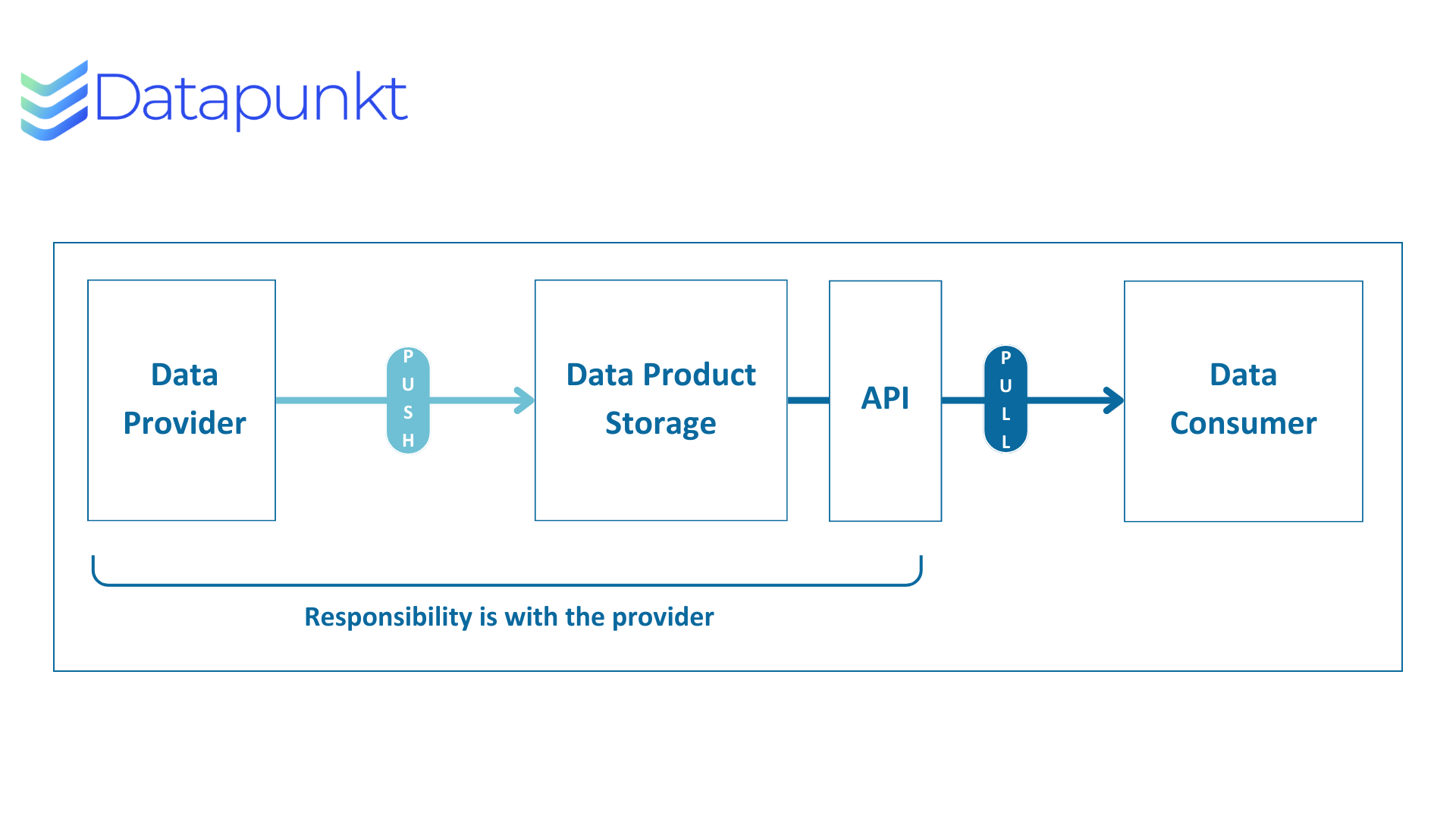
PULL Pattern: This approach is ideal for transactional systems where real-time data access is critical. However, it places a burden on the data provider to ensure consistent availability and performance.
-
PUSH Pattern: In contrast, the PUSH pattern allows the data provider to proactively push data to the consumer, enabling decoupled processing, storage, and historical retention. This is beneficial for analytical pipelines where immediate access isn't crucial.
-
PUSH to PULL Pattern: This hybrid approach combines the benefits of both patterns. Data is initially pushed to shared storage, allowing for historical retention and decoupled processing, but can still be accessed in a PULL mode by consumers who require real-time availability.
Conclusion: A Symphony of Data
Datapunkt's data architecture, with its separation of transactional and analytical pipelines, presents a well-orchestrated approach to managing data for diverse purposes. By adhering to its core design principles, employing effective data pipeline patterns, and fostering a culture of continuous improvement, Datapunkt ensures its data remains a valuable asset, powering real-time operations and insightful data analysis – a true symphony of data management.