- Vadym Humeniuk - Resident Architect
- Datapunkt Persistence Storage
- Hits: 356
Layering Approach in the Persistent Storage
Introduction
In the dynamic landscape of data management, organizations are continuously seeking efficient methods to extract meaningful insights from their vast datasets. The Layering Approach, a fundamental concept within the Datapunkt Persistent Storage architecture, has revolutionized data processing. This approach encompasses multiple layers, each with distinct functionalities and purposes, contributing to a streamlined and optimized data processing pipeline.
Deconstructing the Layering Approach
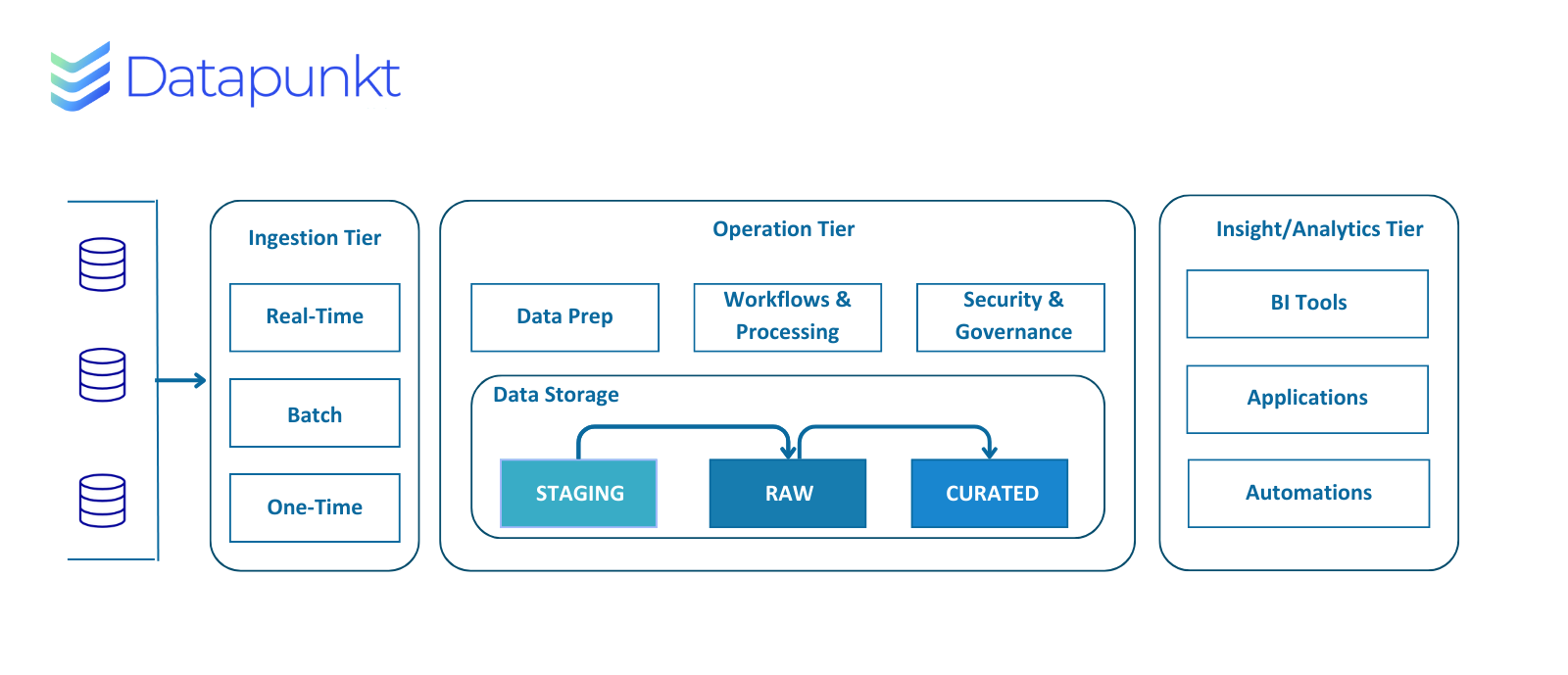
The Layering Approach implemented in Datapunkt Persistent Storage introduces a multi-faceted structure that guides data through various stages of refinement, transformation, and preparation. This approach reimagines the traditional data processing journey, leading to enhanced data quality and expedited insights generation.
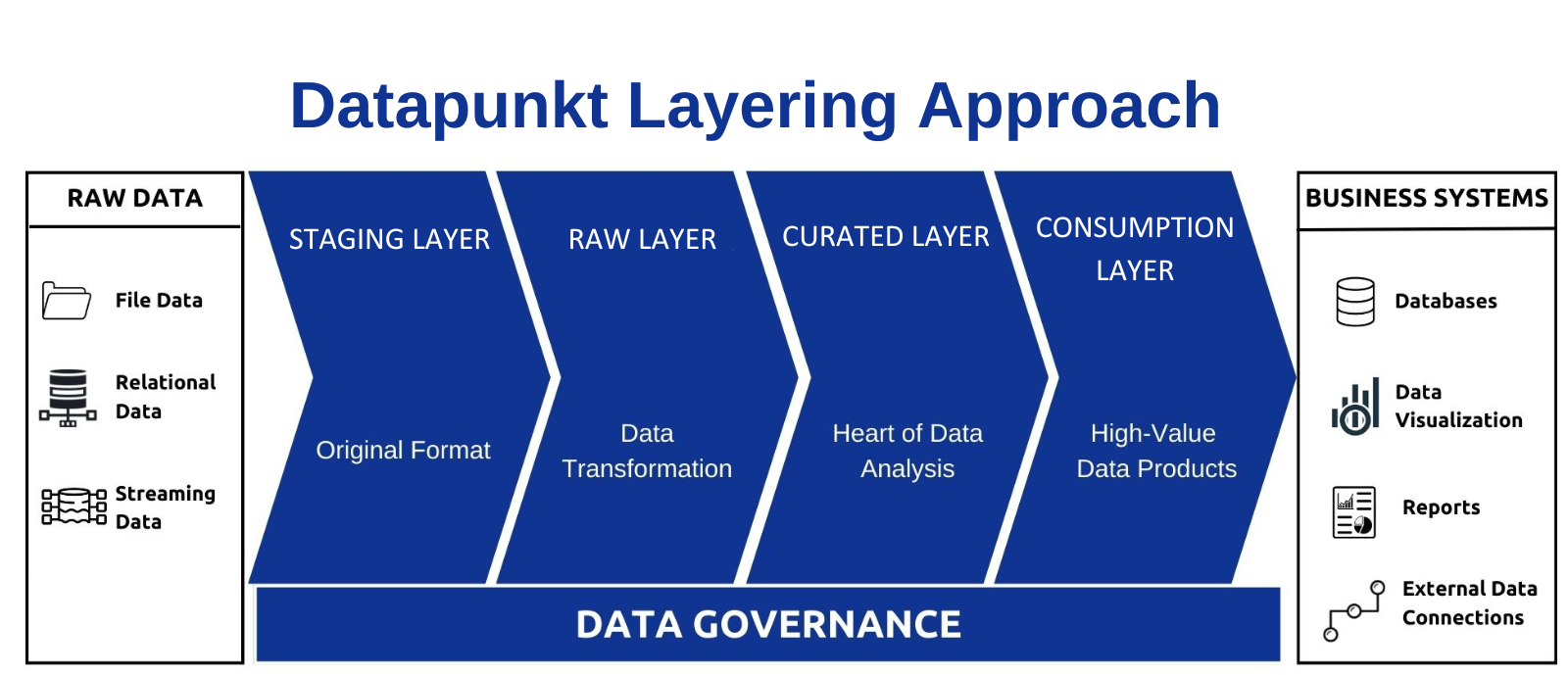
Staging Layer: The Foundation of Data Reservoir
At the base of the Layering Approach lies the Staging Layer. This layer acts as a reservoir, housing data in its raw, unfiltered, and untouched form. The data might be stored in its original format, such as JSON or CSV. Alternatively, it could be stored as compressed file formats like Avro, Parquet, or Databricks Delta Lake, optimizing storage and processing efficiency.
Raw Layer: Orchestrating Data Refinement
The Raw Layer is a transitional phase that refines data before it progresses to the Curated Layer. Far from a mere loading stage, the Staging Layer focuses on data transformation, cleansing, and normalization. This refined data serves as the foundation for the curated layer, ensuring that data consumers access accurate and reliable insights.
Curated Layer: Analytics-Optimized Data Repository
The Curated Layer is the heart of data analysis. Optimized for analytics and reporting, it stores denormalized data marts or star schemas. Here, data from the Staging Layer is transformed into structured, analysis-ready formats, ready to be consumed by data consumers and used for informed decision-making.
Consumption Layer: High-Value Data Products
The final layer in the approach is the Consumption Layer. This layer transforms curated data into high-value data products, tailored to the needs of data consumers. These products can include data science notebooks or be served through read data stores like Azure SQL Database, offering versatility in data access.
Advantages of the Layering Approach
Data Integrity: The Layering Approach ensures that data integrity is maintained throughout the processing pipeline. Data is refined and validated at every stage, enhancing overall data quality.
Streamlined Processing: Each layer has a specific purpose, leading to a streamlined data processing pipeline. This approach minimizes unnecessary complexity and accelerates insights generation.
Analytics-Ready Data: By transforming data in the Staging and Curated Layers, the approach guarantees that analytics-ready data is readily available for data consumers.
Conclusion
The Layering Approach, a core tenet of the Datapunkt Persistent Storage architecture, is revolutionizing the way organizations process and utilize their data. By incorporating multiple layers, from the Raw Layer to the Standardized Container, this approach ensures that data is refined, transformed, and curated to meet the needs of data consumers. With a focus on data integrity, efficiency, and analytics readiness, the Layering Approach empowers organizations to harness the full potential of their data, driving informed decision-making and fostering business growth.
Check out our articles about Persistent Storage: